A good interview begins long before the first question. When your organization is in the spotlight—whether positively or critically—you want your spokesperson to come across as confident, clear, and credible. Even a strong substantive story can falter in the media due to poor language use, an unclear message, or awkward body language. Media training is therefore not a luxury but a necessity, as recently demonstrated by Disney's PR fiasco.
The power of preparation
A spokesperson should not only know the company's story but also know how to convey that story convincingly. Media training helps in formulating core messages: short, clear sentences that stick. Consider repeating one clear core point, avoiding jargon, and actively steering the conversation. Additionally, you learn how to handle critical questions. A journalist is not an extension of your marketing team—so it's crucial to be able to make transitions, stay calm under pressure, and always return to your message.
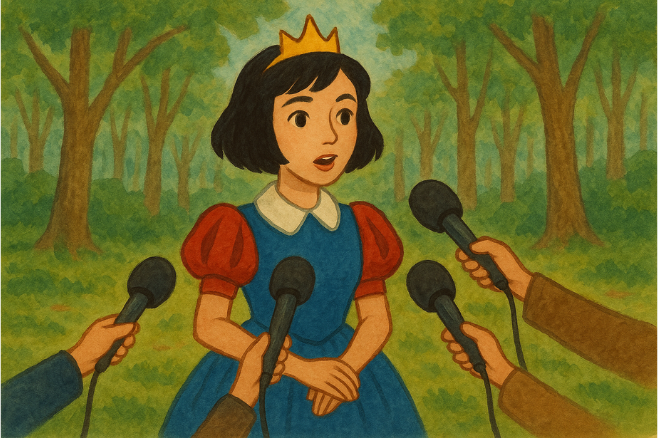
The recent example of actress Rachel Zegler proved this is no luxury. She played the lead role in Disney's live-action remake of Snow White, but her interviews had the opposite effect. Instead of generating enthusiasm for the film, she came across as critical and even condescending towards the original story and the fans. The backlash on social media was enormous, and Disney had to largely revise the marketing campaign. The incident shows: without media training, one wrong interview can completely change sentiment.
Attitude and appearance matter
What you project counts as much as what you say. A spokesperson who wants to be credible must pay attention to tone, pace, posture, and eye contact. Media training makes you aware of non-verbal signals: a nervous laugh, shifting eyes, or restless hands can undermine a story. By practicing in front of a camera, mirror, or during simulated interviews, you develop a natural and powerful way of speaking and moving. This creates calmness, conviction, and, most importantly, trust with your audience.
Someone who mastered this perfectly was former President Barack Obama. With his posture, he exuded tremendous charisma both on camera and with those he engaged with. By appearing relaxed, confident, and cheerful, he conveyed his story very credibly. For those interested: a full exposé on Obama's charisma can be read on the Quest site.
Consistency strengthens your reputation
An organization is often judged by a few faces to the outside world, or in Disney's case: one face. Whether it's a CEO, a specialist, or an external spokesperson—their performance partly determines how reliable and professional you appear. By providing them with media training, you ensure there is a shared line in tone, message, and approach. And it pays off: in consistent communication, better media coverage, and a stronger image. So don't wait until the cameras start rolling; invest in your spokespersons on time. Every second in the media is valuable—provided it's used well.