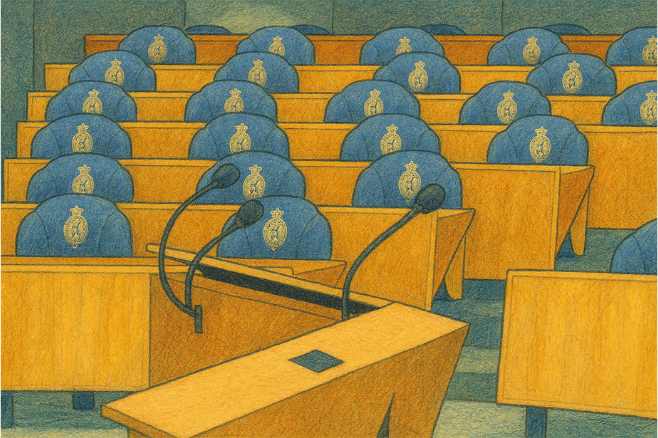
The 'Tweede Kamerverkiezingen' are scheduled for this week (Wednesday, 29 October). PR plays a bigger role in this than you might think, or rather, it already has. Those who know how to play the media with an authentic story not only gain attention, but also influence.
After all, politics is no longer just about debate in the 'Tweede Kamer'; it has become storytelling. Whoever controls the media controls the image. And whoever controls the image often wins more than one seat. In politics, PR is not just the icing on the cake of policy, but the foundation of influence.
From guerrilla actions to viral videos: political parties understand that attention is the new currency. It didn't really make sense for the 62-year-old D66 politician Hans Vijlbrief to stay at a student house, but his video attracted a lot of attention. Beyond the humor, Hans subtly brought up the issue of a shortage of student accommodations, which students greatly appreciated ('apparently D66 understands').
The power of the unexpected
The Partij voor de Dieren recently showcased this as well. While other parties stuck to classic debates and talk show appearances, they opted for a completely different tone: a performance by the Russian punk band Pussy Riot at their campaign event.
A bold but smart move. Pussy Riot is a symbol of activism, resistance, and independence; exactly the values the party wants to portray. And it worked: almost all national media covered it (the NOS, the Nederlands Dagblad, RTL, the NRC, and the AD). Not because it was about election programs, but because it was newsworthy.
That is the essence of political PR: you link your message to something that touches, surprises or challenges people. This way, you not only increase your visibility but also your emotional connection with voters.
Symbolic acts score better than words
Politicians know that deeds attract more attention than words. Jesse Klaver understood this perfectly when he recently walked through a supermarket to put stickers with “new” lower prices, intended to bolster his initiative bill for cheaper groceries.
A strong visual statement that immediately attracted all the cameras. It wasn't a press release, not a debate, but an image. And in an era where news increasingly revolves around what happens on social media, that image is worth gold.
The principle is simple: if you want a message to stick, you need to show it rather than just tell it. You could therefore debate whether political PR is as much theater as it is substance.
Relevance over rhetoric
However, not every media stunt is successful. The line between smart PR and opportunism is thin. An action without content or societal relevance is quickly dismissed as sheer attention-seeking.
This is why the campaign of the Partij voor de Dieren works: their action seamlessly aligns with their image of rebellious idealists with a clear mission. Just like Klaver's supermarket action fits his message of social justice and fair prices. The form enhances the content.
Good political PR, therefore, revolves around authenticity, timing, and social connection. A party that succeeds in packaging its message in a recognizable, visually strong story that fits current affairs receives not only airtime but also credibility.